The Construction Industry Is Still Using Lumber - Mytikas Isn't.
When most people picture the framing inside a wall, they picture lumber. It's what the construction industry has relied on for generations, and for a long time, it was the only real option. But the building world has evolved — and at Mytikas, we've made a deliberate choice to leave lumber behind in favor of something stronger, smarter, and built for the future: Light Gauge Steel (LGS).
This isn't a trend we're chasing. It's a foundational decision rooted in quality, performance, and a commitment to delivering units that are genuinely better than what the manufactured housing industry has traditionally offered. Here's what LGS is, why it outperforms lumber in every meaningful way, and why it's at the core of everything Mytikas builds.
What Is Light Gauge Steel?
Light gauge steel is cold-formed steel — sheet steel that has been galvanized and then roll-formed into precise framing shapes. The galvanization process gives LGS its protective coating, making it resistant to corrosion and environmental stress. The roll-forming process gives it dimensional precision that hand-cut lumber simply can't match. Together, these qualities make LGS one of the most reliable framing materials available in modern construction — and the clear choice for what we're building at Mytikas.
The Howick Machine: Precision Steel at a Fraction of the Cost
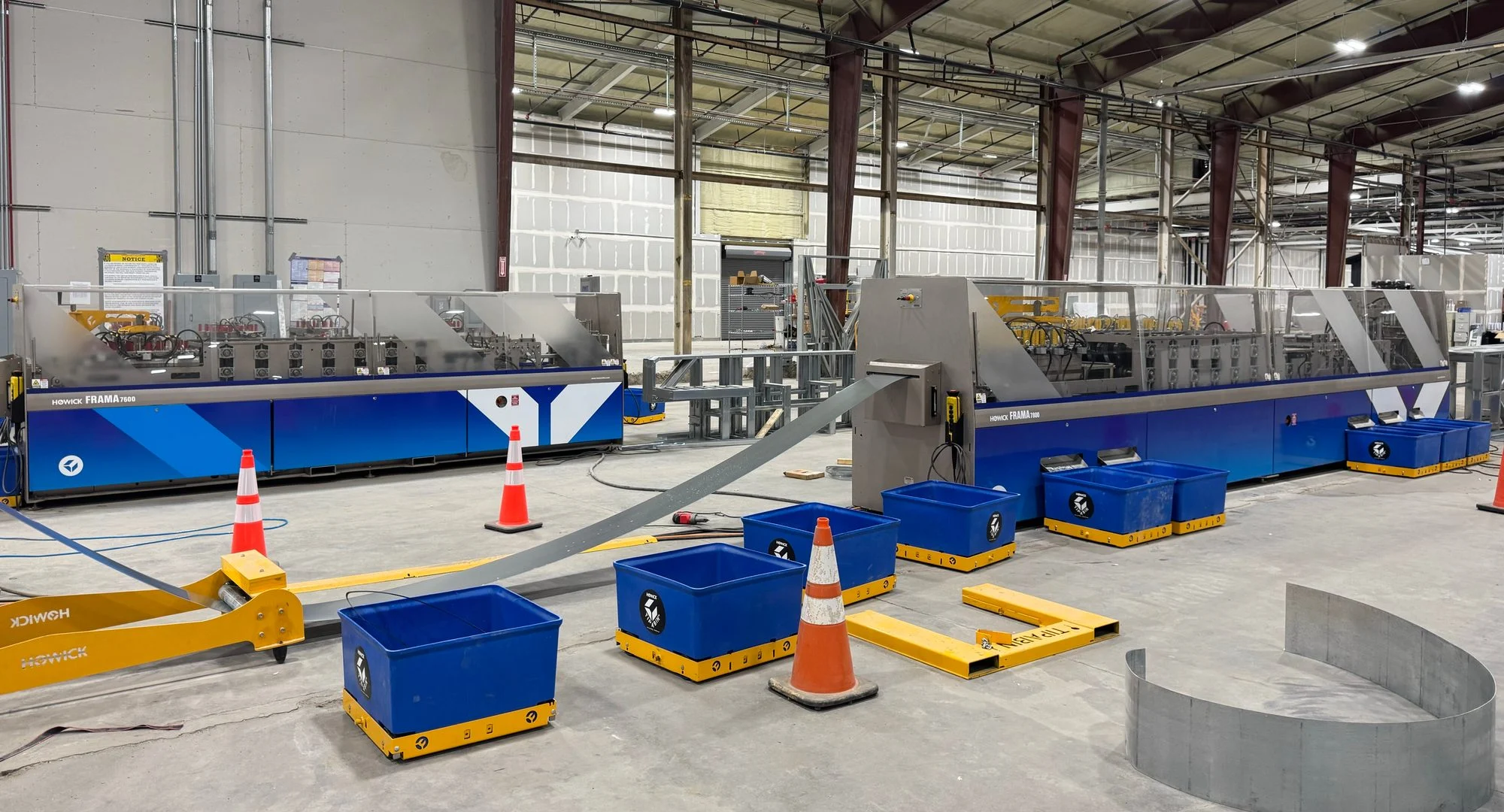
One of the most significant commitments Mytikas has made in the quality of our builds isn't visible once a unit is finished — but it shapes everything about how that unit comes together. We manufacture our light gauge steel framing using a Howick machine, one of the most advanced cold-form steel roll-forming systems available in the industry today.
Here's what that means in practice.
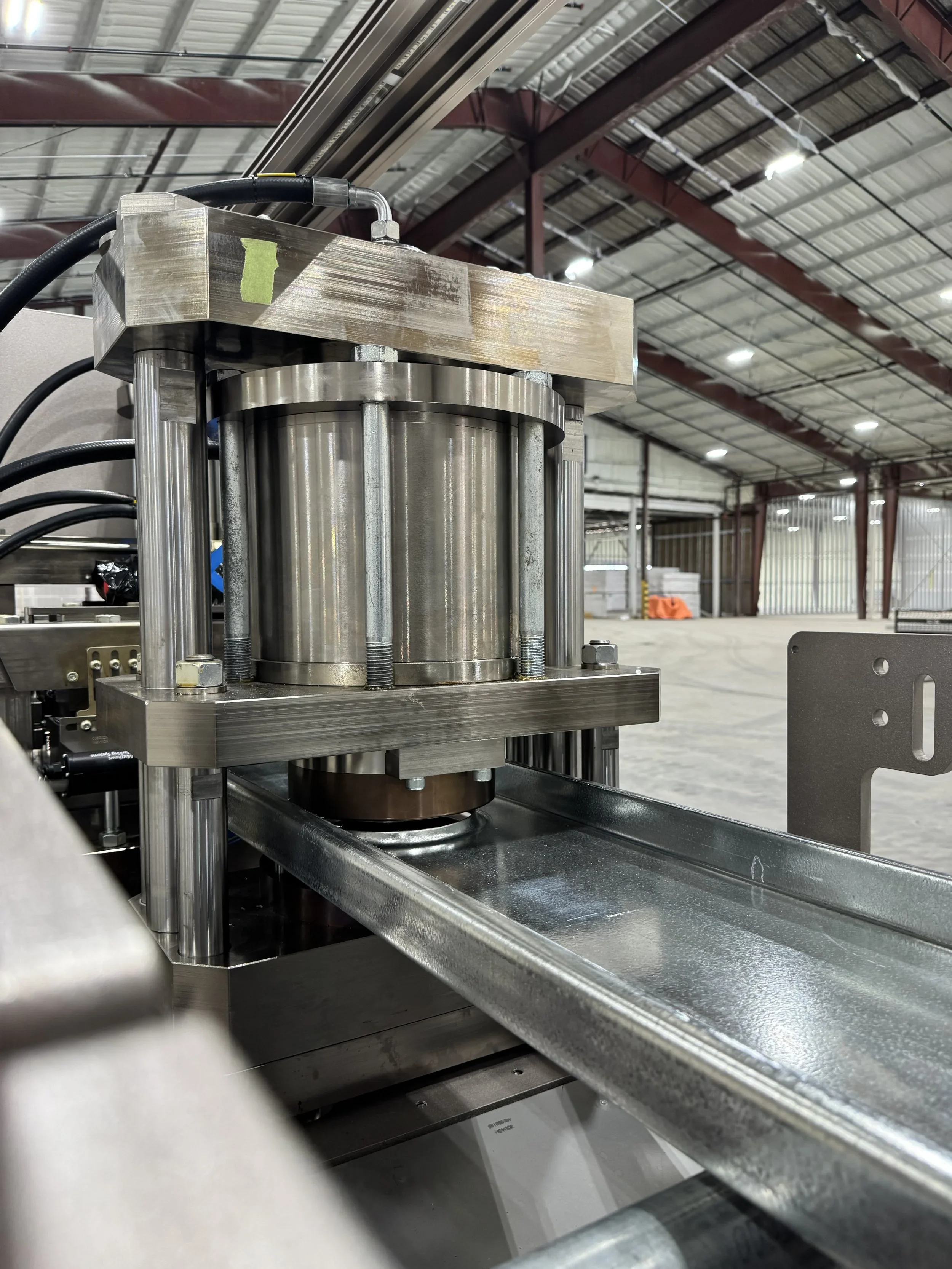
The Howick machine takes raw galvanized steel coil and processes it into finished framing components with extraordinary speed and precision. Every stud, track, and structural member is cut to exact length, punched with service holes, and labeled for installation — all in a single automated pass. What would take a traditional framing crew hours of measuring, cutting, and prepping on a job site, the Howick produces in a fraction of the time.
That speed translates directly into cost savings — and those savings flow through to the finished product. Because our framing components are manufactured efficiently and with minimal material waste, Mytikas is able to deliver a higher-quality unit without the inflated price tag that typically comes with premium construction methods. Our competitors who still rely on hand-cut lumber or outsourced framing simply can't match that combination of precision and efficiency.
But the Howick's advantage isn't just about speed and cost. It's about consistency. Every single piece that comes off our Howick machine is identical to spec. There are no measurement errors, no inconsistent cuts, no framing components that are slightly off and have to be forced into place. When our frames go together, they go together right — because the machine made sure every part was exactly what it needed to be before it ever left our facility.
The result is a framing process that is faster than traditional methods, more accurate than anything done by hand, and purpose-built to produce the kind of tight, true, structurally sound units that Mytikas is known for.
The Problem with Lumber
To understand why Mytikas doesn't build with lumber, you have to understand what lumber actually does over time.
Wood is a natural material, which means it responds to its environment. It absorbs moisture and dries out. It expands and contracts with temperature changes. It warps, twists, shrinks, and checks. These aren't rare failures — they're predictable characteristics of the material itself.
In traditional site-built homes, lumber movement is manageable. Buildings settle over years, and homeowners deal with the occasional sticking door or uneven floor. But in factory-built housing — where units are built in a controlled environment and then transported to a job site — lumber's instability becomes a serious problem.
Most manufactured housing is built with standard lumber in smaller dimensions than a conventional home. Fastening is done largely with staple guns, which creates joints that are adequate at best. When those units hit the road for transport, the combination of road vibration, shifting loads, and structural flex puts real stress on those stapled lumber joints. By the time a unit arrives at its destination, it often shows the damage: cracked drywall, shifted framing, interior finishes that need repair before anyone has ever set foot inside.
That's not the Mytikas standard. And it's exactly why we don't build with lumber.
Why Light Gauge Steel Changes Everything
LGS solves the problems that lumber can't. Here's how:
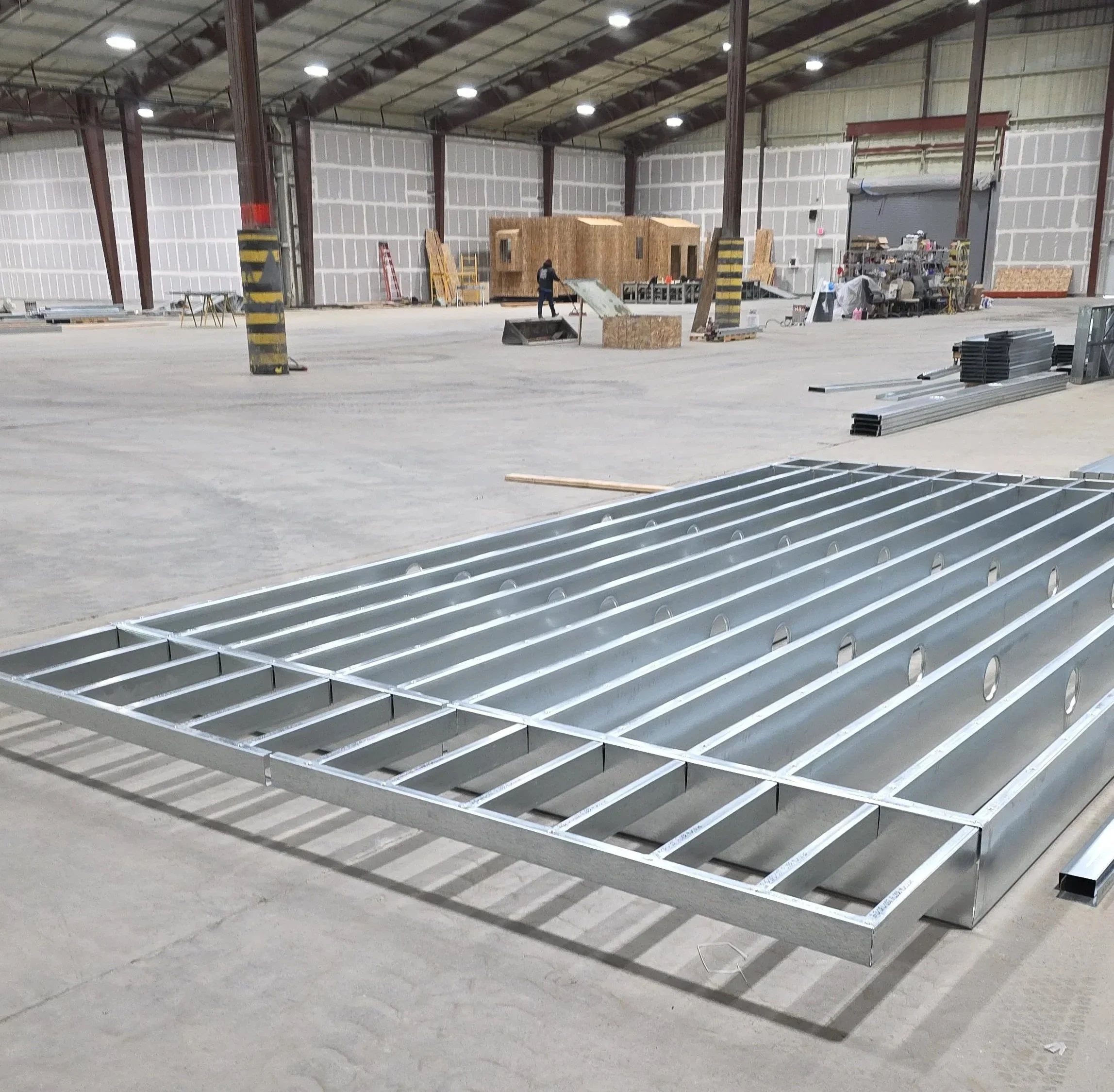
It doesn't move. Light gauge steel doesn't warp, twist, shrink, or check — regardless of the environment it ends up in. Whether a Mytikas unit is installed in a cold northern climate, a dry desert environment, or a wet coastal region, the steel framing holds its shape. Walls stay straight. Corners stay square. Everything remains exactly where it was when it was built.
It's screwed, not stapled. LGS framing is fastened with screws, creating mechanical connections that are significantly stronger and more permanent than the staple-gun fastening used in most manufactured housing. Those connections don't loosen under transport stress. They don't flex and fatigue over time. They hold — and they keep holding.
It arrives ready to build. Because our LGS components are roll-formed and pre-cut by the Howick before reaching the job site, the installation process is faster, more accurate, and far less prone to human error. Every piece is exactly the right length. Every cut is already made. The result is a more efficient build process that doesn't sacrifice precision for speed.
It performs across environments. The galvanized coating on LGS provides protection that lumber simply doesn't have. There's no bad checking, no spalling, no moisture-driven dimensional changes. Whatever environment a Mytikas unit enters, the framing is built to perform in it — long term.
It protects your unit during transport. One of the most significant advantages of LGS for factory-built housing is what happens between the factory and the job site. Because our units are framed with steel screwed together into rigid, stable connections, they absorb transport stress without the structural shifting that damages lumber-framed units. That means your interior finishes — drywall, trim, flooring — arrive the way they left. Intact. Ready. No repair bills before you've even moved in.
The Mytikas Difference
The manufactured housing industry has largely been built on the idea that affordability requires compromise. Smaller dimensions. Lighter fastening. Materials chosen for cost, not performance. Mytikas was founded on a different premise: that a factory-built unit can be built to a higher standard — and that the right materials are where that standard begins.
Light gauge steel, manufactured on our Howick machine and screwed together into a rigid, stable frame, is central to that commitment. It's not a marketing claim or a feature we highlight because it sounds impressive. It's a structural decision that affects every phase of what we build — from the efficiency of the construction process, to the strength of the finished unit, to the condition it arrives in, to the way it performs for the people who live and work inside it for years to come.
When you choose Mytikas, you're not getting a lumber-framed box that happens to look nice. You're getting a unit built on a steel backbone — straight walls, true corners, permanent joints, and framing that was engineered to last.
That's what light gauge steel makes possible. And that's why Mytikas builds with it.